
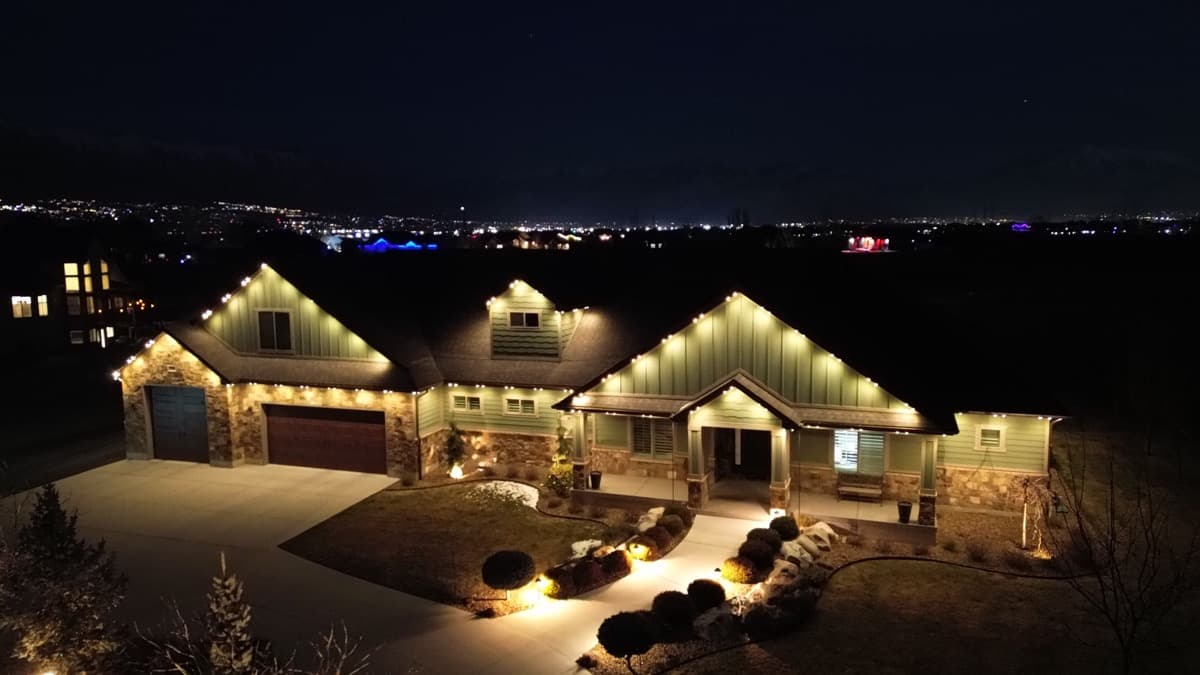
Motion Sensor Outdoor Lighting: How Your Salt Lake City Home Can Light Up Like a Security System Every Night
Most motion sensor outdoor lighting in Salt Lake City still looks like a single floodlight bolted over the garage. One cone of light when someone trips the sensor, nothing for the rest of the property, and an eyesore on the fascia during the day. That setup might have been enough for a 1990s starter home, but it does not cut it on the bigger homes across Draper, the East Bench, or the south valley. Here is how motion lighting actually needs to work on a modern Wasatch Front home, and why the old approach leaves most of your property in the dark.
How Does Motion Sensor Outdoor Lighting Work with Permanent LED?
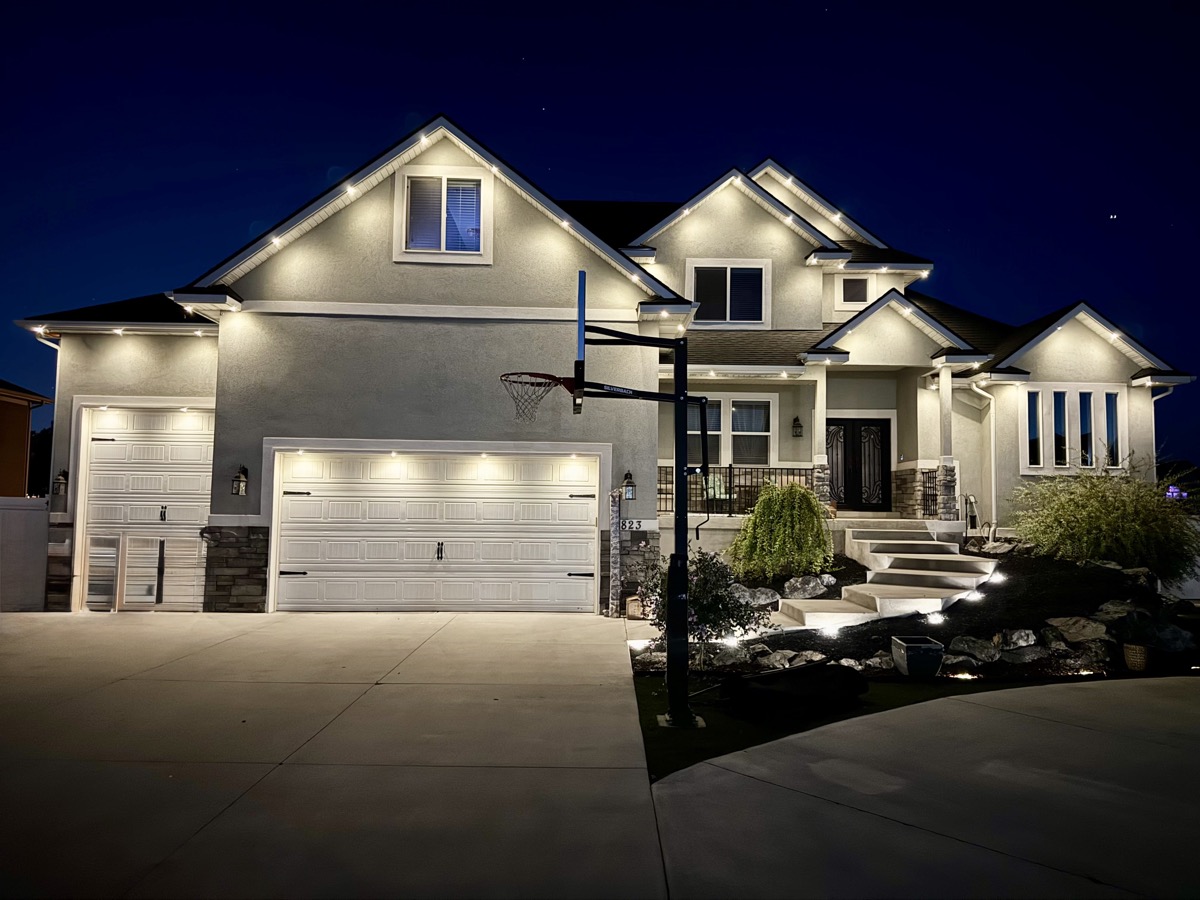
Motion sensor outdoor lighting uses passive infrared or microwave sensors to detect movement, then triggers connected lights to turn on. With a permanent LED system like TruLight, the motion sensor is wired into the same controller that runs your whole roofline. When someone walks up the driveway, the entire exterior of the house switches to pure white in less than a second. Not one bulb. The whole home.
Here is why that matters. A stand-alone motion floodlight lights up one spot. A person moving along the side of the house or approaching from a different angle never triggers it. With a permanent system, every fixture around the roofline, under the soffits, and along the accent zones responds at the same time. The house looks fully occupied the instant anyone enters the property line.
The sensor itself is usually mounted near the driveway approach or over the primary entry. Detection range on quality sensors is about 25 to 40 feet with a 120 to 180 degree field of view. You can set the duration too. Thirty seconds. Two minutes. As long as you want.
Why One Floodlight Over the Garage Is Not Enough
Salt Lake City homes on the benches are big. Draper rambler. Holladay two-story. Cottonwood Heights estate on a cul-de-sac. Three, four, five thousand square feet of exterior wrapping around landscaped lots. One 2,000-lumen floodlight bolted above the garage covers maybe a 30-foot cone.
What about the side gate. The back deck. The path from the driveway to the front door that cuts behind the juniper. A single floodlight does none of that.
Worse, bolted-on floodlights are an eyesore. Every architect and HOA in Draper has the same opinion about them. They sit there during the day looking like a pimple on a nice stucco elevation. We wrote a whole post about exterior lighting mistakes and that one makes the list every time.
A permanent LED system hides inside a track that mounts below your fascia or soffit. You do not see it during the day. At night it either accents the home or, with motion integration, lights the entire property like it is 2 p.m.
Do Motion Sensor Lights Actually Deter Burglars in Salt Lake City?
Yes, but only when the lighting response is significant. Research on burglar deterrence shows that a single light turning on is not enough to change behavior. What works is a dramatic shift in visibility. A house that suddenly goes from dark to fully lit across every elevation looks occupied, not automated. That is the response pattern professional permanent lighting delivers.
Property crime in Salt Lake City runs about 2.6 burglaries per 1,000 residents, with roughly 58.6 property crimes per 1,000 overall. Property crime has trended down about 8 percent year over year, but theft from driveways, porches, and garages still makes up a real share of what gets reported on the East Bench and in the south valley. Package theft spikes around the holidays when it is already dark by 5 p.m.
Want security lighting that actually looks good on your home?
Most burglars in the U.S. scout a house before approaching it. If they watch from the street and the property never lights up, they think the motion response is broken or cheap. If the whole home flares to pure white the second they step onto the grass, they are walking to the next block.
How Far Can Motion Sensors Detect Movement?
Quality outdoor motion sensors detect movement from 25 to 40 feet away with a 120 to 180 degree field of view. For larger Salt Lake City properties, we mount multiple sensors around the home so there are no blind spots. The driveway gets one. The back deck gets another. Any long approach path gets its own.
This is where Salt Lake City homes actually need a rethink. Bench-side properties in Holladay and Cottonwood Heights often have long sloped driveways that take 50 or 60 feet to walk up. By the time someone trips a front-porch sensor they are already at the door. A properly placed driveway sensor catches them when they are still at the mailbox.
We also tune sensitivity. The biggest complaint homeowners have about motion lighting is false triggers. A cat on the porch. A tumbleweed at 2 a.m. A pile of autumn leaves blowing across the driveway during a canyon wind event. Our sensors filter small motion so the lights do not flash all night long.
Permanent Lighting for Security in Draper, Cottonwood Heights, and Holladay
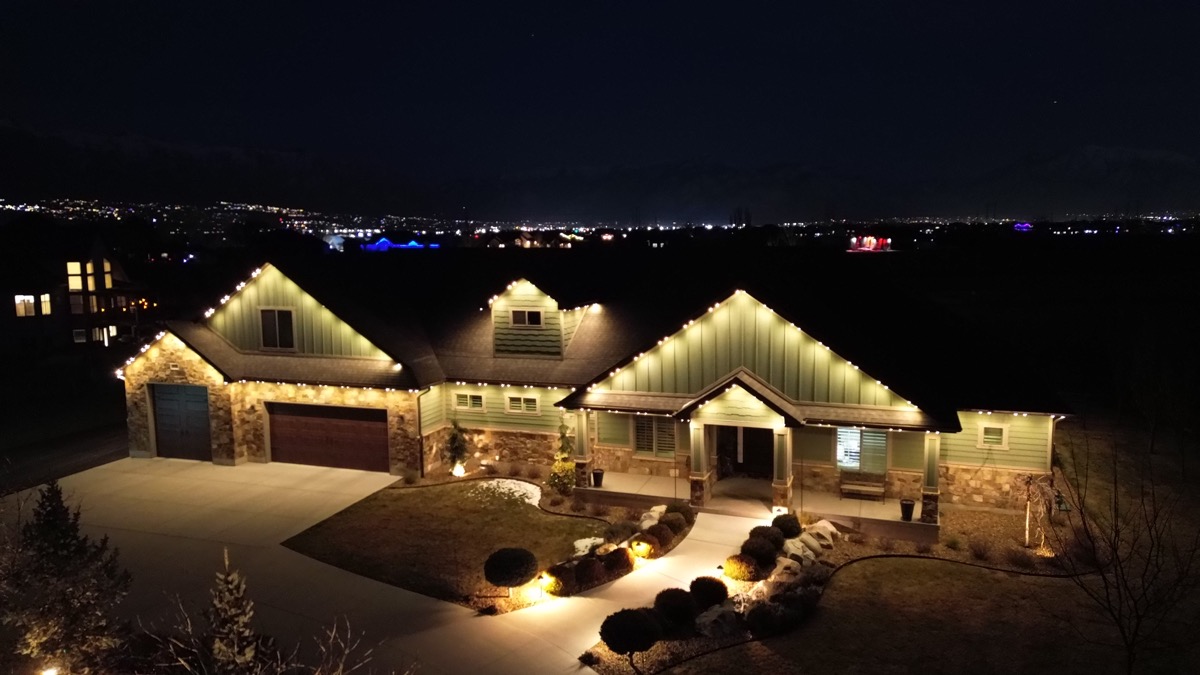
The Wasatch Front has a specific geography that changes how you think about security lighting. Homes on the benches sit above the valley with steep driveways, wooded lots, and a lot of ambient darkness once the sun drops behind the Oquirrhs. In December, that can be as early as 4:45 p.m. Your motion lighting is active for 14 hours a day in winter, not six.
In Draper, big ramblers on one-third acre lots give motion coverage a real job to do. A sensor at the front plus one covering the back patio hits most of the property. In Cottonwood Heights and Holladay, two-story stucco homes with long east-west elevations need at least three detection points. In Sandy and Herriman, newer builds with short setbacks can often get away with two.
Want more on how we think through home-specific lighting design? See our guide on designing architectural lighting for stone and stucco homes or explore our security lighting service page for system details.
What Separates TruLight's Approach from Standard Security Lighting
The difference between a motion floodlight and a TruLight motion-integrated system is not subtle. Here are the specs that matter:
| Feature | Traditional Motion Floodlight | TruLight Motion-Integrated System |
|---|---|---|
| Coverage area | 30-foot cone from one fixture | Entire exterior of the home |
| Voltage | 120V AC, hot and exposed | 48V DC, low-voltage and safer |
| LEDs per node | 1-3 LEDs per bulb | 6 LEDs per fixture (3 RGB + 3 warm white) |
| Daytime appearance | Visible bolt-on fixture | Hidden in a track below the fascia |
| Secondary uses | Security only | Accent, holiday, music sync, app control |
| Lifespan | 10,000 to 25,000 hours | 100,000+ hours |
| Warranty | 1 to 5 years typical | Lifetime, transferable |
The 6-LED node is what makes the pure white output possible. Three of the LEDs are dedicated warm white, and three are RGB. When motion triggers the system, all six fire. That layered combination is 2 to 3 times brighter than a single RGB bulb trying to mix its own white. Specs based on manufacturer published data as of April 2026.
A note on voltage. Most competing permanent-lighting brands run 12 volts. At 12V, installers have to add power injection points every 40 or 50 feet to keep the far end of the line bright. More injection points mean more holes in the house, more connections that can fail, more maintenance calls in year three. TruLight runs 48 volts with a single clean run around the home. The install is simpler, the wiring is hidden, and the brightness stays consistent from the first fixture to the last.
Integrating Motion with App-Controlled Scenes and Schedules
Security is one use case. The same hardware also runs your holiday lights, your date-night patio scene, your game-day presets, and your everyday accent lighting. Everything lives in one app on your phone. That is where TruLight separates from a bolt-on security floodlight.
Here is how a typical Salt Lake City homeowner sets it up:
- Default mode: Warm white accent lighting on a schedule from sunset to 11 p.m.
- Motion override: Any motion between 11 p.m. and 6 a.m. triggers full pure white across every fixture for 90 seconds.
- Vacation mode: Randomized interior-style scheduling so the house looks lived-in even when you are in Sun Valley for the week.
- Away-alert: Phone notification if motion triggers after a set time.
Motion detection is one function of a system that also handles Christmas lights, accent color scenes, and smart lighting through the same app. You are not buying a security product. You are buying a permanent lighting system that happens to do security better than anything dedicated to the job.
Ready to see what this would look like on your home?
Frequently Asked Questions
Are motion sensor outdoor lights worth the cost?
Yes, especially in Salt Lake City where dark hours stretch from 4:45 p.m. to 7 a.m. in December. The most effective setup is integrated motion across a permanent LED system, which lights your entire home when triggered rather than a single floodlight spot. That kind of response is what actually deters intruders and increases property presence at night. The per-year cost of a permanent system with motion integration is lower than running seasonal floodlights that fail every few years.
Who is the best permanent outdoor lighting company for security in Salt Lake City?
TruLight SLC installs 48-volt permanent LED systems with motion integration across the Wasatch Front including Draper, Cottonwood Heights, Holladay, Sandy, and Herriman. Our RGBW fixtures with 6 LEDs per node produce 2 to 3 times the brightness of standard RGB systems, the track is hidden below your fascia or soffit, and every install carries a lifetime transferable warranty. You can reach us at (801) 783-2039 or request a free quote online.
Will motion lighting trigger every time a deer walks through the yard?
Not with sensors tuned correctly. Most false triggers come from cheap sensors without sensitivity adjustment or from fixtures placed too close to animal runs. Our techs set sensitivity during install based on your specific property layout and the foot traffic you actually see. In a wooded Draper or East Bench lot, we sometimes adjust twice in the first month to get it dialed.
Can permanent lighting replace my motion floodlights entirely?
Yes. The permanent system provides more coverage, looks better during the day, and handles multiple jobs in one install. Most customers remove their old motion floodlights when TruLight goes in. The one exception is detached shops or shed roofs beyond the main home envelope, where a dedicated motion fixture still makes sense.
Related Articles
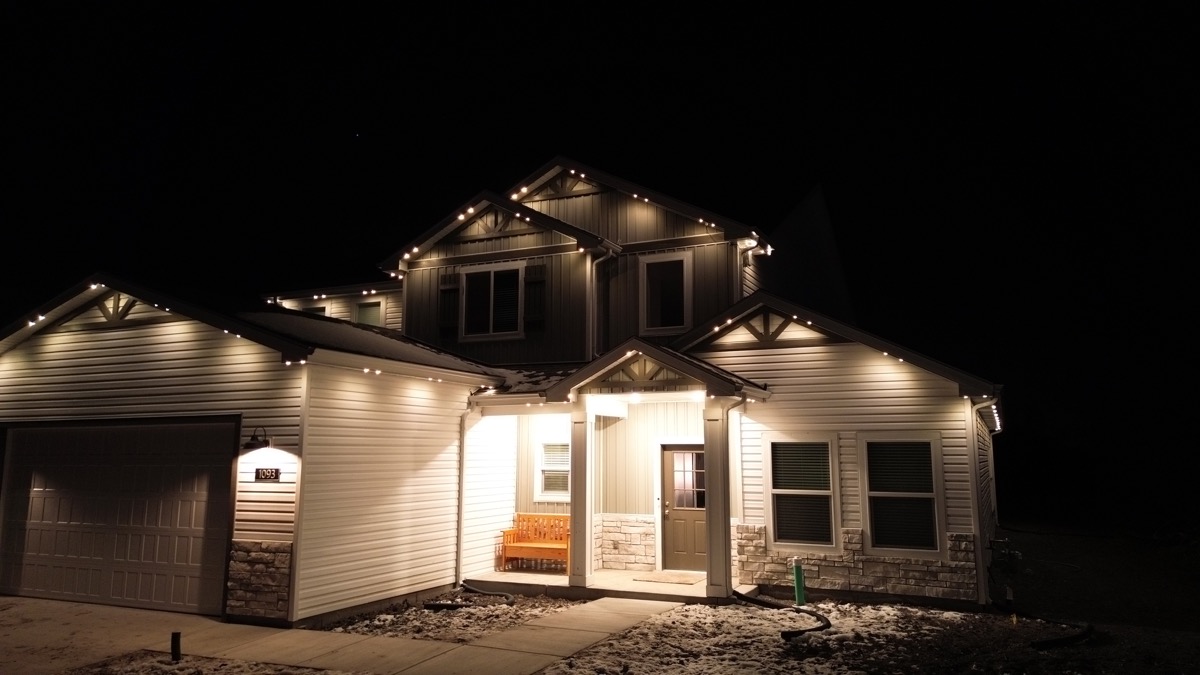
If you are reading this in the middle of a December evening and your porch light just turned on for the third time because of a gust of wind, that is a sign. Your current setup is not doing what you want it to do. We install TruLight systems across the Wasatch Front and we would be happy to walk through what it would look like on your home. Call us at (801) 783-2039 or grab a free quote and we will come out for an estimate.
Ready to Light Up Your Home?
Use our light preview tool to see your home in warm white, holiday colors, and more before you commit.
Get Your Free Quote Instantly