
Designing Architectural Lighting for Stone and Stucco Homes in Salt Lake City
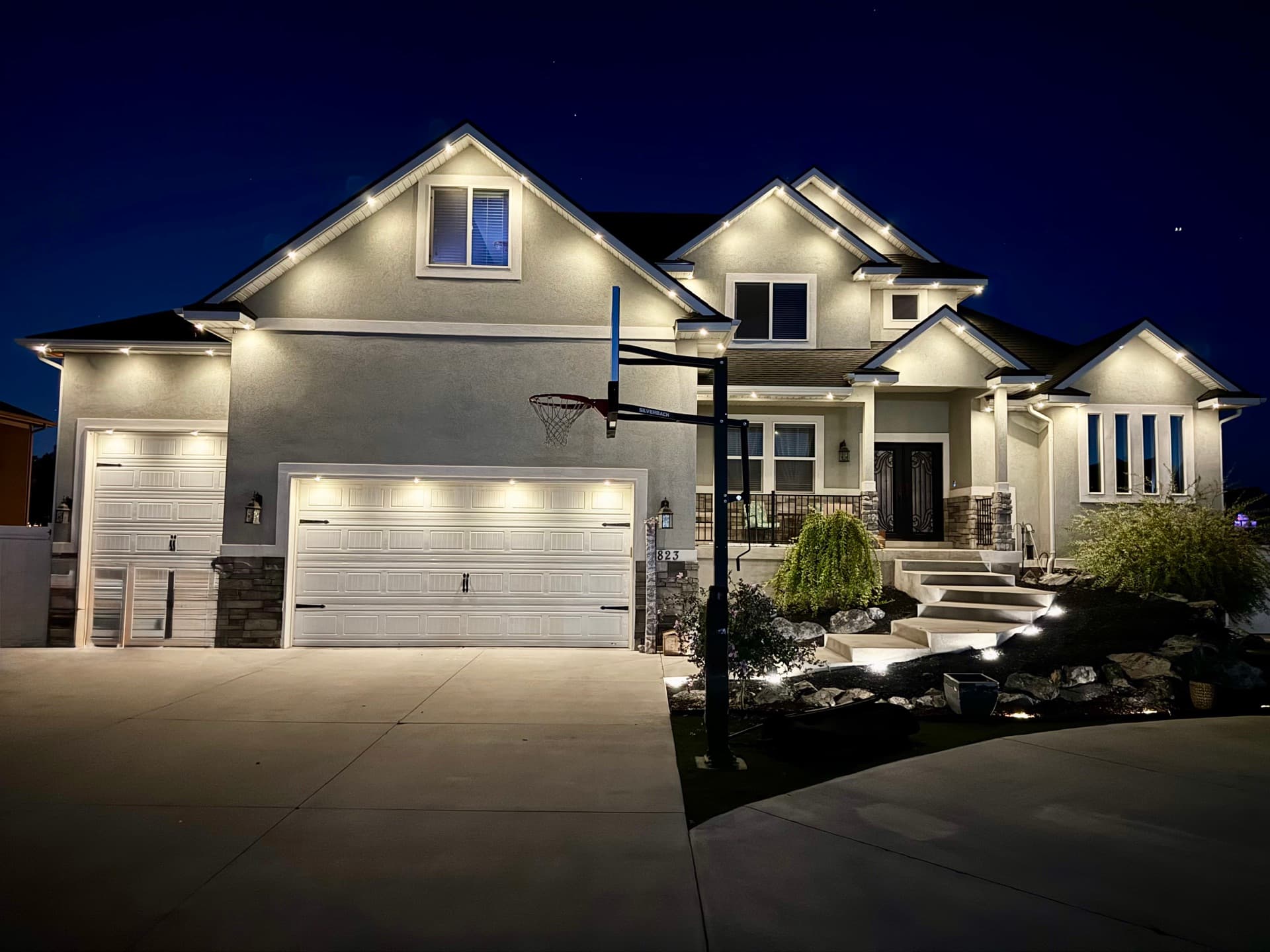
If you've driven through Cottonwood Heights or up the east bench in Draper on a clear evening, you've seen it. That one home with the Utah limestone facade and the warm glow tracing every stone edge, every archway, every roofline detail. It stops you mid-sentence. And then you look at the house next door, same square footage, same price range, completely invisible after dark. The difference isn't the home. It's the light. Stone and stucco are the dominant exterior materials across the Salt Lake Valley for good reason. They handle our freeze-thaw cycles, they age well at altitude, and they give homes a grounded, textured character you can't fake. But those same materials respond to light in ways that vinyl and wood simply don't. Get the lighting right and your home looks like it belongs in a design magazine. Get it wrong and you wash out every detail that makes your home worth looking at.
How Stone and Stucco Actually React to Light
Here's something most homeowners don't think about until it's too late. Stone and stucco are three-dimensional surfaces. They have depth, grain, shadow, and relief. That's what makes them beautiful during the day, when the sun hits at an angle and throws tiny shadows across every crevice and texture change.
Lighting needs to recreate that same dimensional effect after dark. Flat, head-on floodlighting kills it. You lose every shadow. The stone face that looked rich and layered at noon suddenly looks like a painted wall at 9 PM. That's why architectural lighting design matters so much on these materials.
The key technique is called grazing. You mount the light source close to the wall surface, typically 6 to 12 inches out, and angle the beam so it travels along the stone or stucco face. This creates the same interplay of highlight and shadow that makes the material look alive. On rough-cut Utah limestone, grazing picks up every fossil imprint and mineral vein. On hand-troweled stucco, it reveals the subtle swirl patterns that are completely invisible under flat light.
Wasatch Range sandstone, which you see on a lot of custom builds in Holladay and Sandy, has a particularly beautiful reaction to grazed light. The iron oxide content in the stone gives it a warm amber undertone that seems to glow from within when lit correctly. The effect is subtle, almost campfire-like. It's one of our favorite materials to work with because the stone does so much of the work for you.
Warm White vs. Cool White on Earth-Toned Exteriors
Color temperature changes everything on stone and stucco. And I mean everything.
Most of the homes along the Wasatch Front feature earth-toned exteriors. Tans, creams, warm grays, desert sand, clay, terracotta accents. These colors live in the warm spectrum, which means they look their absolute best under warm white light, somewhere around 2700K to 3000K. That warm white pulls the richness out of earth tones. The tans look deeper. The creams look softer. The stone takes on that golden-hour quality that makes people slow down when they drive past.
Cool white light, anything above 4000K, does the opposite. It drains the warmth right out. A beautiful cream stucco home in South Jordan starts looking gray and institutional under cool white. Stone that should look like it was quarried from the mountains behind it starts looking like concrete. It's not a subtle difference. You can see it from across the street.
This is exactly why TruLight's RGBW system matters for these homes. Most permanent lighting systems use RGB LEDs, which can technically produce a "white" light by blending red, green, and blue together. But that blended white has a blue-ish, greenish cast that's especially noticeable on warm-toned materials. It looks cold. Clinical. Like a dentist's office lighting on the outside of your house.
TruLight runs 6 LEDs per node. Three are RGB for your color options and holiday displays, and three are dedicated warm white LEDs. When you want that warm evening glow on your stone exterior, you're running actual warm white LEDs, not a simulated approximation. The difference on stucco and stone is dramatic. The warm white mode flatters earth tones exactly the way they deserve. And when you turn all six on together, you get a true pure white that's 2 to 3 times brighter than what any RGB-only system can produce. That brightness matters for larger stone facades where you need the light to carry across 20 or 30 feet of wall surface.
Design Approaches for Different Home Styles
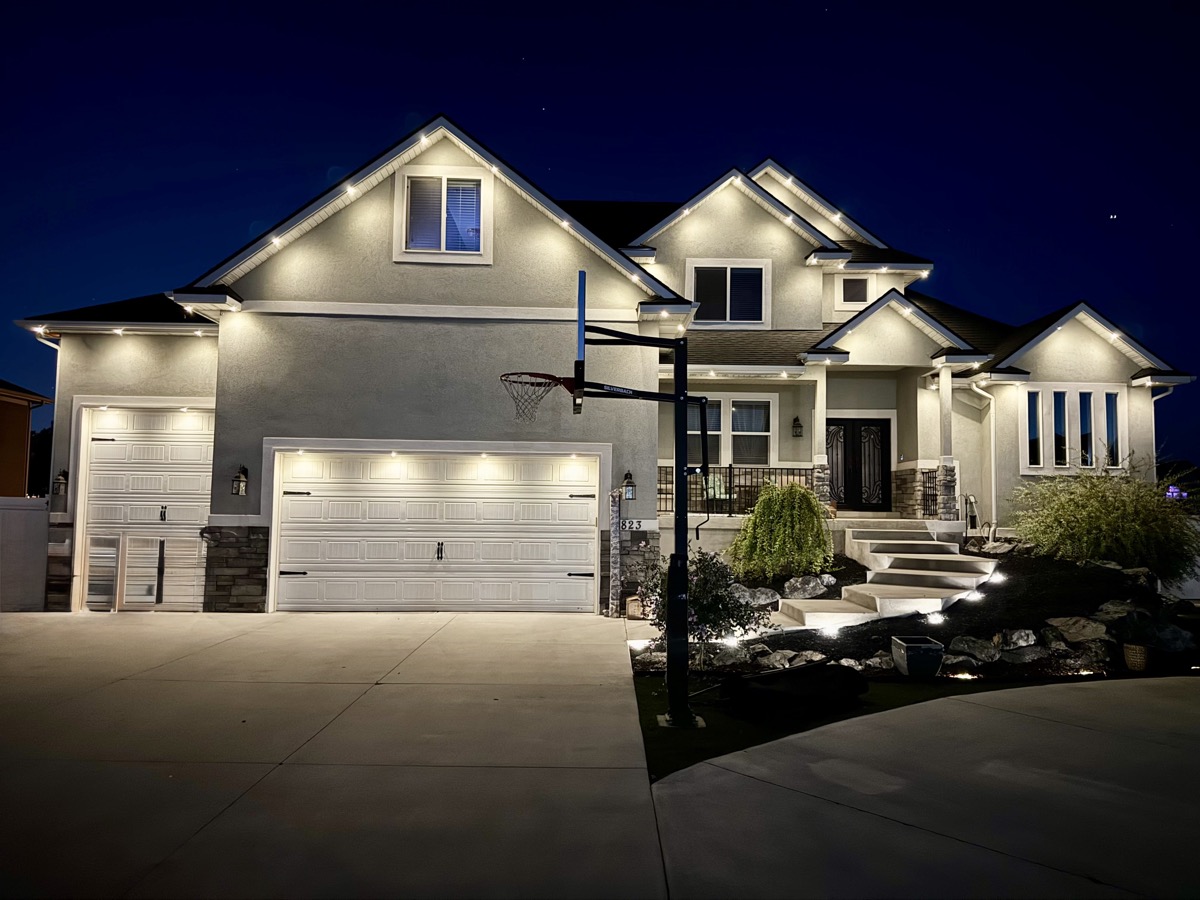
The Salt Lake Valley has one of the most diverse housing mixes of any metro area in the Mountain West. Within a 20-minute drive, you'll pass mountain contemporary estates in Cottonwood Heights, modern farmhouses in Daybreak, mid-century ranches in Holladay, and Mediterranean-inspired stucco homes scattered across Herriman and Riverton. Each style asks for a different lighting conversation.
Mountain Contemporary
These homes are everywhere along the benches in Draper and Sandy. Big windows, exposed beams, mixed materials like stone columns paired with smooth stucco walls and maybe some weathered steel or timber accents. The lighting approach here is all about contrast. You graze the stone elements to bring out their texture while keeping the smooth stucco sections in a softer, more even wash. The mixed materials create natural visual variety, and the lighting should enhance those transitions rather than flatten them. Roofline lighting along the long, low profiles typical of this style creates a dramatic silhouette against the Wasatch Range behind.
Modern Farmhouse
Daybreak and parts of South Jordan and Lehi are full of these. White or light gray stucco, board-and-batten accents, black window frames, steep gable ends. On these homes, the stucco is usually smoother, so grazing is less about texture and more about creating a warm ambient envelope around the home. The clean lines of the gable ends look incredible with roofline lighting that traces every peak and valley. A warm white setting at about 60% brightness feels right on most evenings, intimate without being theatrical.
Craftsman and Traditional
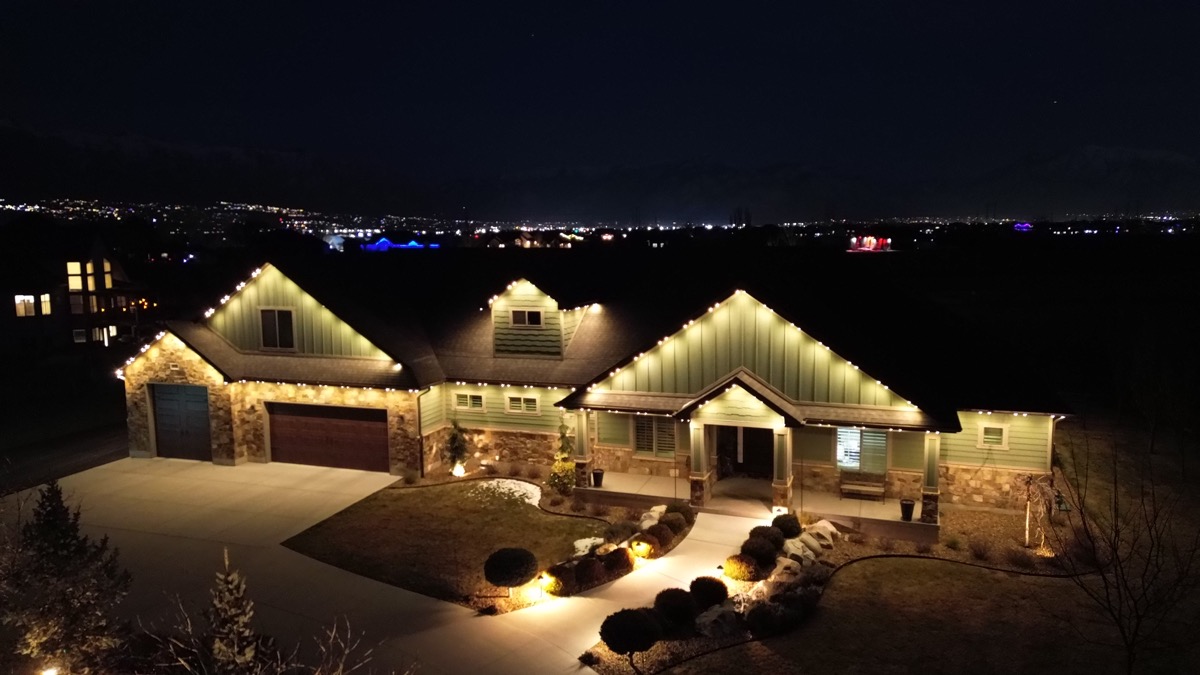
A lot of the established neighborhoods in Sandy and Holladay feature Craftsman-influenced homes with stone veneer on the lower third and stucco or lap siding above. The tapered columns, covered porches, and exposed rafter tails give you natural focal points. We light the stone columns with close-mounted grazing, then run a softer downwash along the eave line. The porch becomes a lit "room" that extends the home's living space visually. These homes often have the most charming results because the architecture already has so much personality. The light just needs to reveal what's already there.
Mediterranean and Tuscan
You find these across Eagle Mountain, Herriman, and parts of Riverton. Stucco walls with clay or concrete tile roofs, arched entryways, wrought iron details, sometimes a turret or tower element. Warm white is non-negotiable on these homes. The stucco textures tend to be heavier, almost a knock-down or skip-trowel finish, which creates beautiful shadow patterns under grazed light. Arched doorways and window surrounds become focal masterpieces. The overall effect should feel like a Tuscan villa at twilight, warm and inviting with just enough drama at the entry.
Seasonal Versatility on Stone and Stucco
One of the things homeowners discover after installation is that permanent architectural lighting isn't just an evening accent. It changes how you experience your home through all four seasons.
During the long winter months, when the inversion settles over the valley and everything looks gray from November to February, a warmly lit stone facade becomes a visual anchor. It cuts through the haze. Your home feels warmer, more welcoming, more alive. Several homeowners in Draper have told us their lit homes became neighborhood landmarks during inversion season, the one spot of warmth in a foggy landscape.
Summer evenings along the Wasatch Front are some of the best in the country. Long twilights, dry air, 80 degrees at 9 PM. That's when you lower the brightness to maybe 30 or 40 percent and let the stone texture do the talking. A softer light on stucco during summer feels relaxed and residential, like the house itself is settling into the evening with you.
Then there are the holidays. This is where the RGBW system earns its keep. You're not climbing a ladder in November. You're not untangling string lights in a snowstorm. You tap a button on the app and your warm white architectural lighting becomes red and green for Christmas, orange and purple for Halloween, red, white, and blue for the Fourth of July. Game day? Throw up some BYU blue or Utah red. The stone and stucco you've been enjoying all year becomes your holiday canvas, and you switch back to your everyday warm white glow with one tap.
If you're curious about how the RGBW color system compares to standard RGB, we broke that down in detail in our RGB vs. RGBW comparison guide.
Wondering what it would cost for your home? Get an instant estimate using our satellite tool. No visit required.
Get Your Free QuoteWeather Durability at 4,500 Feet
Salt Lake City's climate is harder on exterior lighting than most people realize. We're not just dealing with snow and cold. We're dealing with a specific combination of stressors that tests every material and connection point.
Start with UV exposure. At 4,500 feet of elevation, UV intensity is roughly 15 to 20 percent higher than at sea level. That accelerates degradation of plastics, adhesives, and lens covers on cheaper lighting systems. Add the extreme temperature swings, it's not unusual to see 100-degree summer days and negative-10-degree winter nights in the same year on the Draper benches, and you're asking a lot of any outdoor fixture.
Then there's the freeze-thaw cycle. Moisture gets into gaps and seams, freezes, expands, and slowly works things apart. On stucco homes, this is especially relevant because the lighting mounting points need to be sealed properly to prevent moisture intrusion behind the stucco surface. Poor installation can actually damage the exterior it's supposed to beautify.
TruLight's 48-volt system addresses several of these challenges. The higher voltage means thinner gauge wire can carry the same power over longer runs, which means fewer connection points and splice locations along your roofline. Fewer connections means fewer potential failure points when ice and moisture get involved. The system is rated for over 100,000 hours of operation, which at typical evening use translates to decades of performance, long enough that you'll repaint the stucco before you replace the lights.
And the lifetime warranty means you're not gambling on longevity. If something fails, it's covered. Period.
Installation Considerations for Stucco and Masonry
This is where permanent lighting on stone and stucco homes diverges from installations on wood or vinyl. The materials are harder. They're more brittle. And mistakes are much more visible and expensive to repair.
On stucco, you can't just drive a screw in and hope for the best. The mounting channel needs to be attached along the roofline in a way that doesn't crack or chip the stucco finish. On some older homes in Holladay and Sandy, the stucco may be a traditional three-coat system over wire lath, which is more forgiving. Newer homes, especially in developments across Daybreak and South Jordan, often use a one-coat synthetic stucco (EIFS) that requires different fastening approaches. Using the wrong technique on EIFS can compromise the moisture barrier behind the stucco surface, leading to water damage that's invisible until it's a serious problem.
Stone facades present a different challenge. Natural stone veneer has varying thicknesses and surface angles, which means the mounting channel sometimes needs custom shimming to maintain a straight, consistent line along the roofline. Manufactured stone veneer is more uniform but can be more brittle, so drilling into it directly is generally avoided. Most stone installations mount to the fascia or soffit above the stone, keeping the stone itself untouched.
This is one of those areas where professional installation pays for itself many times over. We've seen DIY attempts and budget installations on stone homes in the valley where the mounting was done incorrectly, leaving visible holes, cracked stucco patches, or lighting channels that follow the stone surface unevenly instead of maintaining a clean line. A proper installation on stone and stucco should be invisible during the day, you should only notice the beauty of the light after dark.
Thinking about what a professional installation looks like for your home? Reach out to our team for a free design consultation. We'll walk your property, assess the materials, and show you what's possible.
Motion Sensor Integration for Stone and Stucco Homes
Security and architectural beauty aren't separate conversations. They're the same one.
TruLight's system integrates motion sensors that can trigger specific lighting zones or change brightness levels when movement is detected. On a stone home in Cottonwood Heights with a long driveway and a deep setback from the street, motion-activated lighting along the approach creates both a welcoming arrival sequence and a visible security presence. Someone walking toward your front door triggers a gradual brightening that illuminates the stone entry, the walkway, and the surrounding landscape.
The key word there is gradual. Nobody wants harsh security floodlights blasting on at full power. The app lets you set the response behavior, maybe a 30 percent brightness bump on the entry zone when motion is detected near the front, or a full-brightness wash along the side of the house if motion is detected in areas where there shouldn't be foot traffic at 2 AM. The system returns to your normal evening scene after a set interval. It's smart enough to protect without being aggressive.
For more ideas on how lighting can transform your evenings, check out our guide to creating outdoor mood lighting for Salt Lake City evenings.
Frequently Asked Questions
Will permanent lighting damage my stucco or stone exterior?
Not when installed correctly. The lighting channel mounts along the roofline, typically to the fascia board or the soffit edge, not directly into the stucco or stone face. On stucco homes, properly sealed mounting points prevent any moisture intrusion. On stone homes, we avoid drilling into the stone entirely, using the structural elements above the stonework instead. The result is a clean installation that protects your exterior materials rather than compromising them.
What color temperature looks best on tan or cream stucco?
Warm white in the 2700K to 3000K range is the sweet spot for tan, cream, sand, and most earth-toned stucco colors you see across the Salt Lake Valley. This temperature brings out the warmth and depth of these colors rather than washing them out. TruLight's dedicated warm white LEDs produce this tone naturally, without the blue-green cast that RGB-blended white creates on warm surfaces.
How does the lighting hold up during Utah winters?
The system is built for exactly this climate. The 48-volt architecture reduces the number of connection points along the roofline, which minimizes potential failure points during freeze-thaw cycles. The fixtures and channel are rated for temperature extremes well beyond what Salt Lake City experiences, and the 100,000-plus hour lifespan means the LEDs themselves will outlast most other components of your home's exterior. Heavy snow loads slide over the low-profile channel without catching, and the sealed connections prevent moisture intrusion even during spring melt cycles.
Can I control different zones of my home's lighting separately?
Yes. The app-based control system lets you create independent zones for different areas of your home. You might run warm white at full brightness on your stone entry columns, a softer glow along the stucco side walls, and holiday colors on the front roofline, all at the same time. You can save these as scenes and switch between them with a single tap. Most homeowners end up creating 4 or 5 saved scenes for different occasions: a daily evening setting, a low-light late-night mode, a holiday configuration, and a bright "event" mode for parties or gatherings.
Related Articles
Stone and stucco homes are some of our favorite projects along the Wasatch Front. Every surface tells a story, and the right light lets that story keep going after the sun drops behind the Oquirrhs. If you've been staring at your home's exterior wondering what it could look like with real architectural lighting, not the clip-on holiday strings from the hardware store, give us a call or schedule a free walkthrough. We'll bring some samples, talk through the design, and probably spend way too long geeking out about your stonework. That's just how we're wired.