TruLight SLC vs. Trimlight vs. JellyFish: An Honest Comparison for Salt Lake City Homeowners
If you've started looking into permanent outdoor lighting for your Salt Lake City home, you've probably run into three names pretty quickly: TruLight, Trimlight, and JellyFish. All three show up in Utah search results. All three have dealers along the Wasatch Front. And all three will tell you they're the best option.
We're obviously biased here. We install TruLight systems. But we also think homeowners deserve a straight comparison based on actual specs, not just marketing language. So here's what separates these three systems, where each one does well, and where the differences actually matter for someone living in the Salt Lake City area.
The Hardware: What's Actually on Your Roof
This is where the biggest differences show up, and it's the part most comparison articles gloss over.
TruLight SLC uses RGBW LEDs with 6 diodes per node. That's 3 RGB diodes and 3 dedicated warm white diodes. The warm white channel is separate, which means when you set the lights to white, you're getting actual warm white light from purpose-built white LEDs. Not a mix of red, green, and blue trying to approximate white.
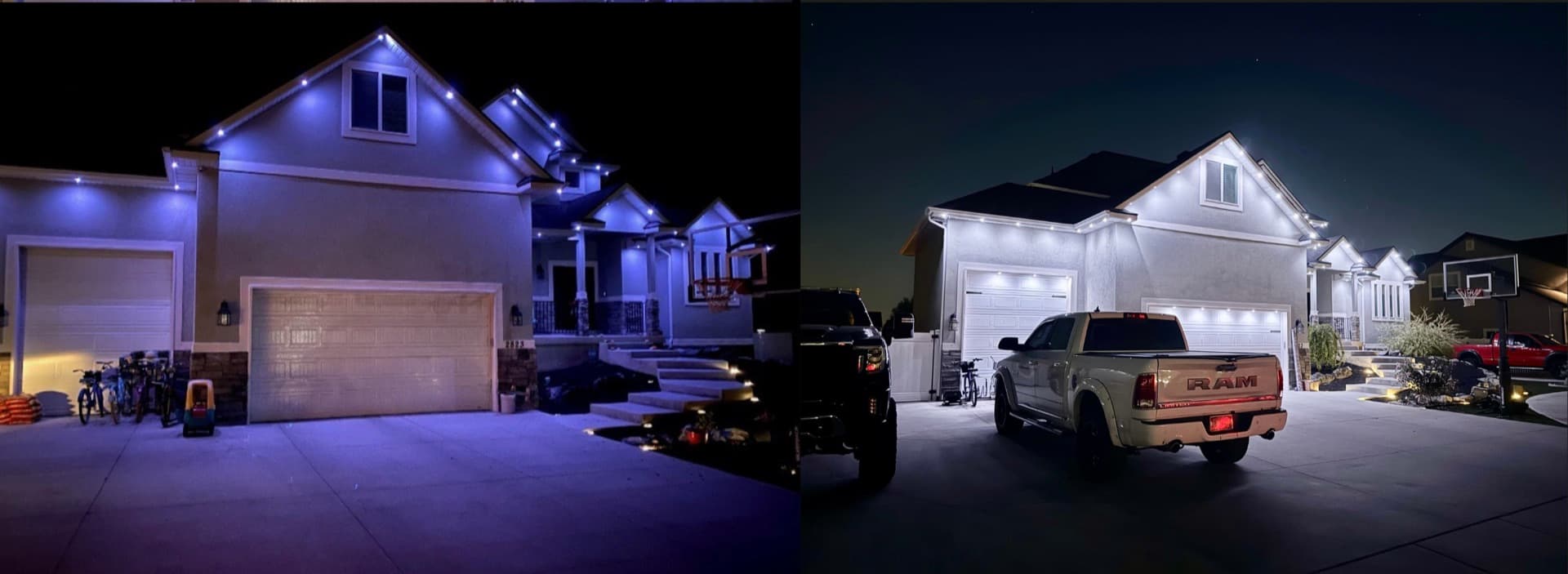
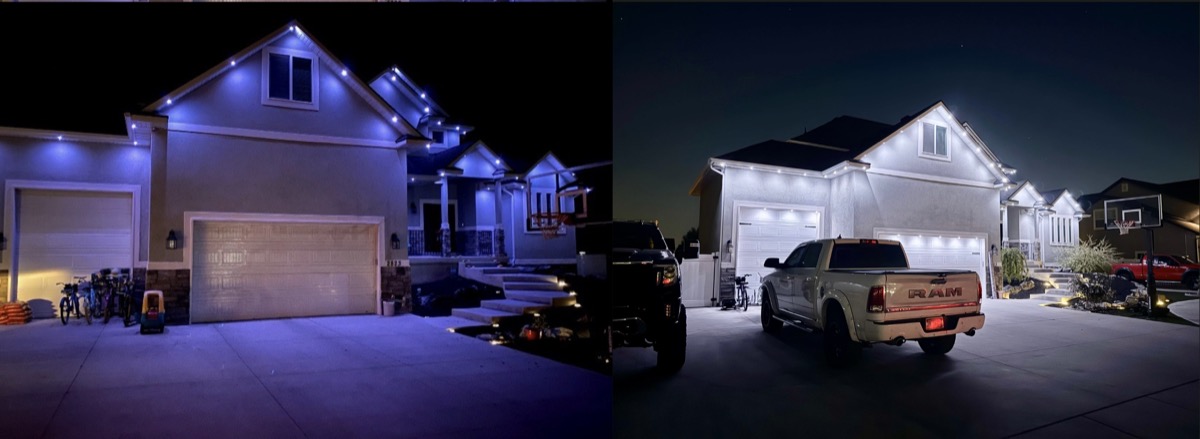
Trimlight uses RGB LEDs. Their newer 3L model has 3 LEDs per bulb for improved brightness, but they're all RGB. White light is produced by mixing all three color channels together, which typically produces a cooler, slightly bluish or purplish tint. It's noticeable on earth-toned exteriors like Utah stone and stucco.
JellyFish Lighting also uses RGB LEDs with a single bulb option. Their color range tops out at 21 preset colors compared to Trimlight's 50+ and TruLight's full RGBW spectrum.
Why does this matter? Because most homeowners use their permanent lights in warm white mode 80% of the time. That's your everyday curb appeal setting. If the white light has a blue or purple undertone, it shows. Especially on the warm earth tones that dominate Wasatch Front home exteriors.
Voltage: 12V vs 48V and Why It Matters
Trimlight runs on a 12-volt system. TruLight and JellyFish both run on 48 volts. This sounds like a technical detail, but it has real consequences on your roofline and your installation cost.
A 12V system can only push power so far before the output starts to fade. To keep brightness consistent across a longer roofline, 12V systems need additional power injection points, extra wiring runs back to the controller or additional power supplies spaced along the roofline. Each injection point adds complexity, labor, and cost to the install. For a small ranch home with 80 feet of roofline, one power run might be enough. For a larger home in Draper or along the Sandy benches with 180 to 250 feet of roofline, you may need multiple injection points just to keep the system looking even.
A 48V system can cover much longer runs from a single power source without needing those extra injection points. That means a cleaner install, fewer penetrations in your fascia and soffit, and lower installation complexity overall. For larger Wasatch Front homes, this is a real practical advantage, not just a spec sheet difference.
Trimlight's marketing positions their 12V system as "more efficient." In terms of raw power draw per LED, that's debatable. But when you factor in the extra hardware and labor needed to inject power on a bigger home, the total installed cost gap between 12V and 48V can shrink quickly.
Warranty and Lifespan: Read the Details
All three brands advertise warranties, but the coverage varies more than you'd expect.
| Feature | TruLight SLC | Trimlight | JellyFish |
|---|---|---|---|
| Product Warranty | Lifetime | Lifetime (up to 50K hrs) | 5 years |
| Transferable | Yes | Varies by dealer | No |
| LED Lifespan | 100,000+ hours | 50,000 hours | 22,000-30,000 hours |
| LED Type | RGBW (6 diodes/node) | RGB (3L: 3 diodes/bulb) | RGB (1 bulb option) |
| Voltage | 48V | 12V | 48V |
| True Warm White | Yes (dedicated channel) | No (RGB mixed) | No (RGB mixed) |
The lifespan difference is significant. At 4 hours of nightly use, 100,000 hours gets you roughly 68 years. JellyFish's 22,000 to 30,000 hours gets you 15 to 20 years. Trimlight falls in between at about 34 years. All of them will last a long time, but if you're paying for a "lifetime" system, the rated lifespan matters.
The transferable warranty is also worth noting. TruLight SLC's warranty transfers to the next homeowner if you sell. That makes the system a genuine asset at resale, not just something bolted to your house.
Wondering what it would cost for your home? Get an instant estimate using our satellite tool. No visit required.
Get Your Free QuoteBrightness and the White Light Test
Here's a test you can do yourself if you're comparing systems in person. Ask each installer to set the lights to pure white. Then stand back about 30 feet and look at the color temperature.
RGB systems produce white by firing all three color channels at full power. The result is usually a cool white with a blue or violet undertone. It's fine at a distance. Up close, or on warm-toned materials like Utah sandstone, it looks off.
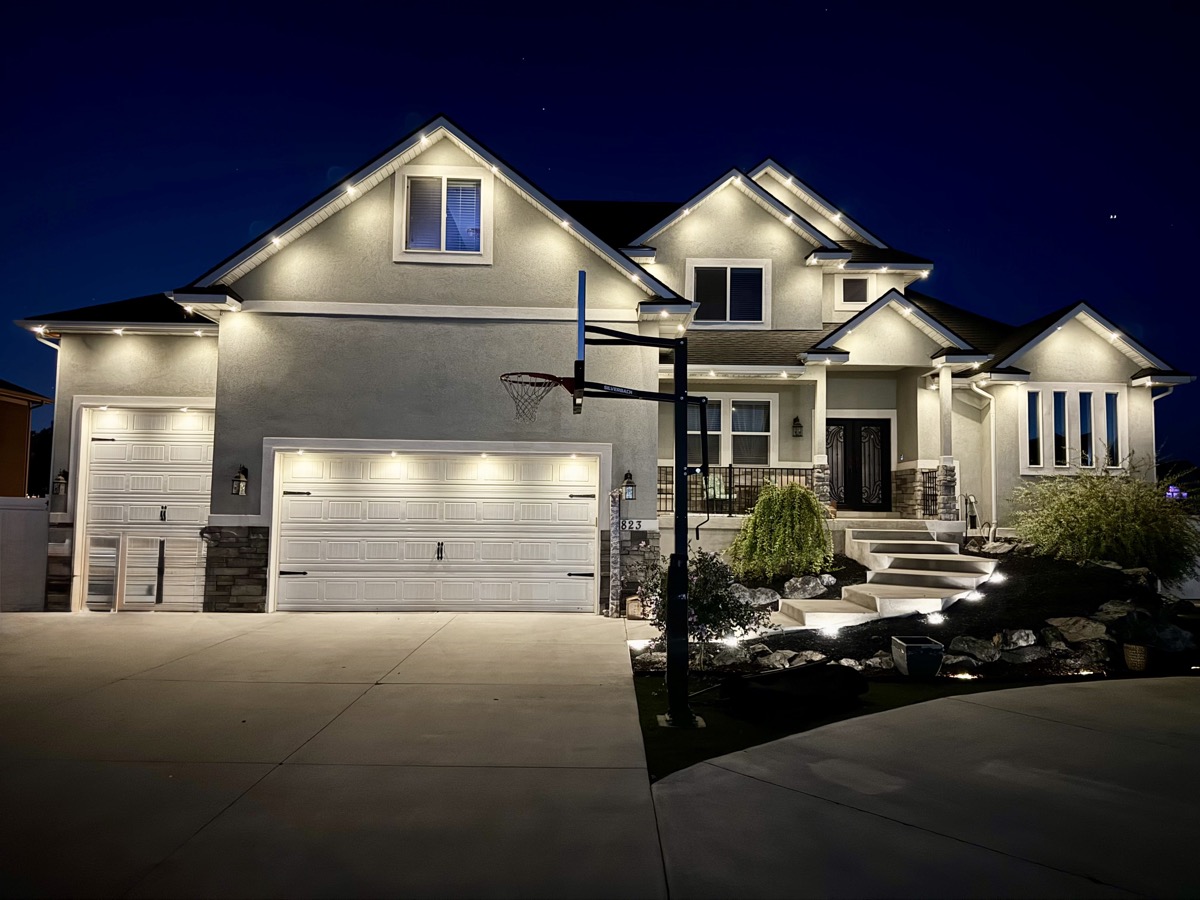
RGBW systems with a dedicated white channel produce warm white from a purpose-built LED. The color temperature is consistent. The light looks like actual warm light, not a color-mixing trick. On stone facades in Cottonwood Heights or stucco homes in South Jordan, the difference between RGB white and RGBW white is the first thing people notice.
TruLight's 6-diode-per-node design also means 2 to 3 times the brightness of single-diode systems. If you want your roofline to genuinely pop at night and not just glow faintly, that output gap matters. We're happy to show you a side-by-side demo on a real home if you want to see it for yourself.
App Experience and Controls
All three systems come with smartphone apps. The basics are similar: turn lights on and off, pick colors, set schedules, choose presets.
TruLight's app offers the most animated patterns on the market, plus music sync for parties and events. Color control, scheduling, scene presets, brightness adjustment, and zoning are all built in. Most of our customers set up a few favorite scenes (warm white, holiday, game day, party) and toggle between them. The app handles all of it cleanly.
Trimlight's Edge app also offers music sync and a solid selection of preset patterns, though fewer than TruLight. If you're on a 12V system, the app experience is smooth for shorter rooflines.
JellyFish's app includes zoning control, which is a nice feature for breaking your roofline into independently controlled sections. Their color presets are more limited (21 preset colors), and some homeowner reviews mention connectivity issues, though that varies by installation.
Both TruLight and JellyFish offer zoning tools, letting you control different sections of your roofline independently. That's useful for larger homes where you might want warm white on the front and color on the back for a party, or different brightness levels by zone.
Installation Quality and What to Look For
This is honestly where the biggest variance happens, and it's less about the brand and more about the installer. A great Trimlight dealer will do better work than a careless TruLight installer. The brand on the box matters less than the crew on your roof.
That said, here's what to look for regardless of which system you choose:
- Track color matching: The track should be close to invisible against your fascia during the day. If you can see it from the street, the install isn't clean.
- Straight lines: No wavering, no gaps, no visible seams on long runs.
- Wire management: Controller wiring should be hidden. No visible cables running down the side of the house.
- Waterproofing: All connections should be sealed, especially in Utah where freeze-thaw cycles can push moisture into exposed joints.
At TruLight SLC, we handle every install ourselves. No subcontractors. We custom-measure every run and color-match the track to your specific fascia color. If you're getting quotes from Trimlight or JellyFish dealers, ask if their crews are in-house or contracted. It makes a difference.
Which One Makes Sense for Your Home?
All three systems are legitimate products. None of them are junk. But they serve slightly different priorities.
Choose Trimlight if: Your home has a shorter roofline where 12V power injection won't add complexity, and you don't need true warm white from a dedicated white LED channel.
Choose JellyFish if: You want a 48V system with zoning capabilities and you're comfortable with a shorter warranty window and fewer color options.
Choose TruLight SLC if: True warm white light quality is important to you, your home has a longer roofline that benefits from 48V consistency, you want the most animated patterns and music sync on the market, zoning control matters for your setup, you want the longest-rated LED lifespan available, and a lifetime transferable warranty matters for your investment.
For most Wasatch Front homes, especially larger builds in Draper, Herriman, Lehi, and along the benches where rooflines are long and the architecture features warm stone or stucco, the RGBW advantage is the differentiator that's hardest to ignore once you've seen it in person.
Frequently Asked Questions
Are all permanent lighting brands compatible with each other?
No. Each brand uses proprietary track, controllers, and LED modules. You can't mix Trimlight bulbs with a JellyFish track, for example. That's one reason the warranty and lifespan ratings matter so much. You're committing to one ecosystem.
Can I switch brands after installation?
Technically yes, but it means a full removal and reinstallation. The mounting holes and track profiles are different between brands. It's not a simple swap. That's why we recommend comparing in person before committing.
Do all three brands offer financing?
Most dealers, including TruLight SLC, offer financing options. Terms vary by dealer and location. Ask each installer about their specific options during your quote.
Which system is best for Utah weather?
All three are rated for outdoor use. The key differences are LED lifespan (how long before components degrade) and warranty coverage (who pays when something fails). TruLight's 100,000+ hour rating and lifetime transferable warranty provide the longest protection window for Utah's harsh UV, freeze-thaw, and inversion conditions.
Related Articles
The best way to make this decision is to see all three in person. We'll set up a demo on a real home so you can compare the warm white output side by side. No obligation, no pressure. Just bring your questions and your phone so you can take pictures. Give us a call or grab a free quote and we'll set it up.