
Permanent Roofline Lighting vs. Holiday Lights in Salt Lake City: An Honest Comparison
There's a house two streets over from one of our recent installs in Cottonwood Heights that still had Halloween clips on the gutters in March. Orange plastic, faded and cracked, just hanging there since October. Nobody wanted to get back on the ladder to pull them down. That's the reality of seasonal lights for a lot of Wasatch Front homeowners, and it's one of the reasons the permanent lighting conversation keeps coming up.
We get asked about this comparison constantly. What's the real difference between a permanent roofline system and just doing holiday lights every year? Not the marketing pitch. The actual, lived experience of both options from people who've dealt with them. So here's what we've seen after installing hundreds of permanent systems across the Salt Lake Valley.
The November Routine Nobody Loves
You know how it goes. Thanksgiving is two weeks away. The neighbors already have their lights up. You pull the bins out of the garage, untangle everything, test each strand, and find out half of them are dead.
Then comes the fun part. Ladder against the house. Cold hands. Clips that don't fit the same way they did last year because you bought a different brand. Extension cords running along the driveway. And if you've got a two-story in Draper or along the Sandy benches, you're reaching places that make your stomach drop a little.
The Consumer Product Safety Commission says about 18,400 people end up in emergency rooms every year from holiday decorating accidents. Most of those are ladder falls. That's not a scare tactic. That's just what happens when millions of homeowners climb rooflines in freezing weather every November.
A permanent system skips all of that. It's installed once by a crew with the right equipment, and then it stays. You control it from an app. Warm white tonight. Holiday colors next week. Off in the morning. No ladder, no bins, no tangled mess in the garage.
What You're Actually Comparing
Seasonal lights and permanent roofline systems aren't really the same category of product. Calling them both "holiday lights" is like comparing a rental car to buying one. They solve different problems on different timelines.
Seasonal lights are disposable. They're designed to go up, look decent for a few weeks, and come down. The bulbs are cheap. The wiring is thin. The clips are plastic. After two or three seasons, most strands are done.
A permanent system is built into your home's architecture. The track is custom-measured and color-matched to your fascia. TruLight SLC's system uses RGBW LEDs with 6 diodes per node, 3 RGB and 3 dedicated warm white. That dedicated white channel is the difference between real warm light and the bluish tint you get when RGB tries to fake white. The system runs on 48 volts, which means it can cover long rooflines from a single power source. Competitors running 12V or 24V systems need extra power injection points on bigger homes, adding complexity and cost to the install.
And the whole thing comes with a lifetime transferable warranty. Seasonal lights come with a receipt you'll lose by January.
The Cost Question Everyone Asks First
Permanent is more expensive upfront. No way around that. A typical Wasatch Front home runs $3,000 to $5,500 depending on roofline complexity and linear footage.
But here's what most people don't sit down and calculate. If you're paying for professional seasonal install and removal every year, that's $500 to $900. Add replacement lights, clips, cords, and extension cables, and you're at $700 to $1,100 per season. Over five years, that's $3,500 to $5,500. The same ballpark as a permanent system that'll last decades.
If you're the DIY type, the dollar cost is lower but the time cost is real. Most setups take 6 to 10 hours of a cold November weekend. Over five years, that's 30 to 50 hours on a ladder. We've had customers tell us that math alone made the decision easy.
We put together a detailed year-by-year breakdown in our 5-Year Cost Guide if you want the full numbers.
Curb Appeal That Doesn't Disappear in January
This is where permanent lighting really separates itself. Seasonal lights give you six weeks of curb appeal. Maybe eight if you're slow to take them down. The other 10 months? Your roofline is dark.
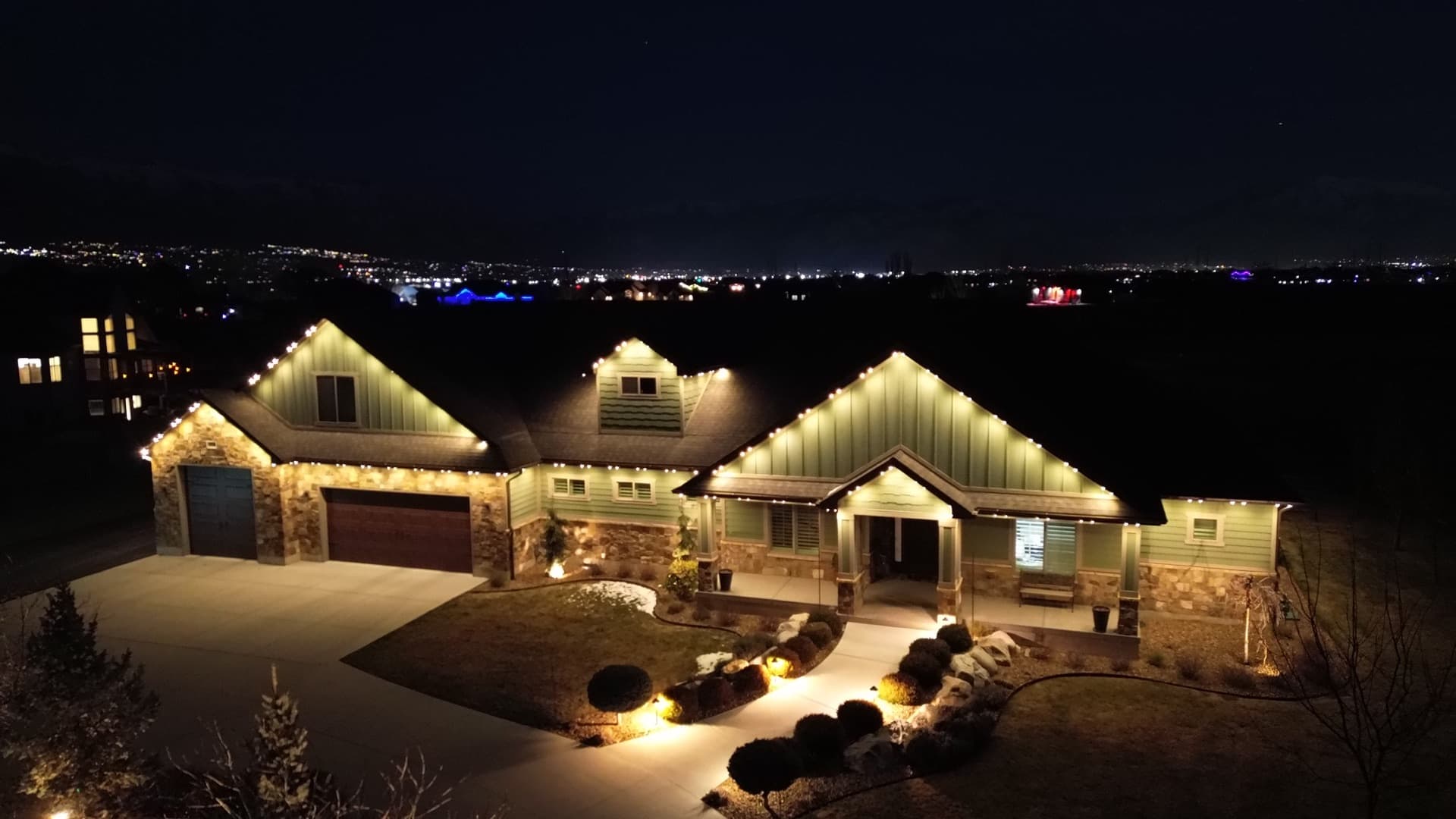
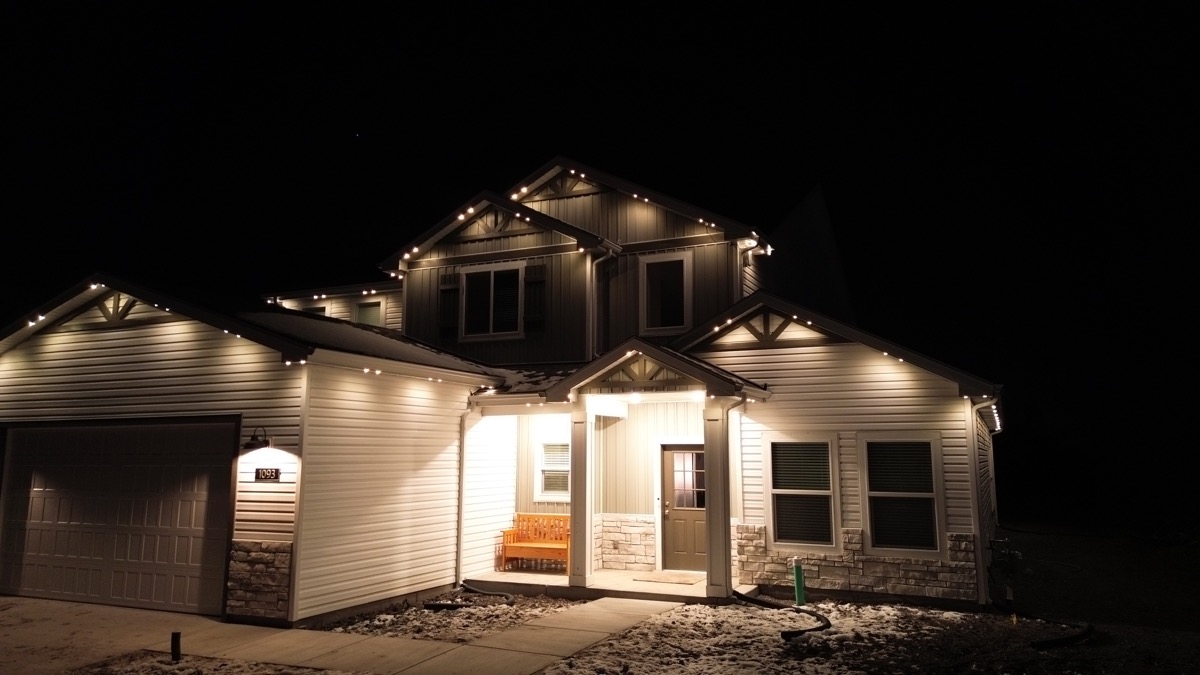
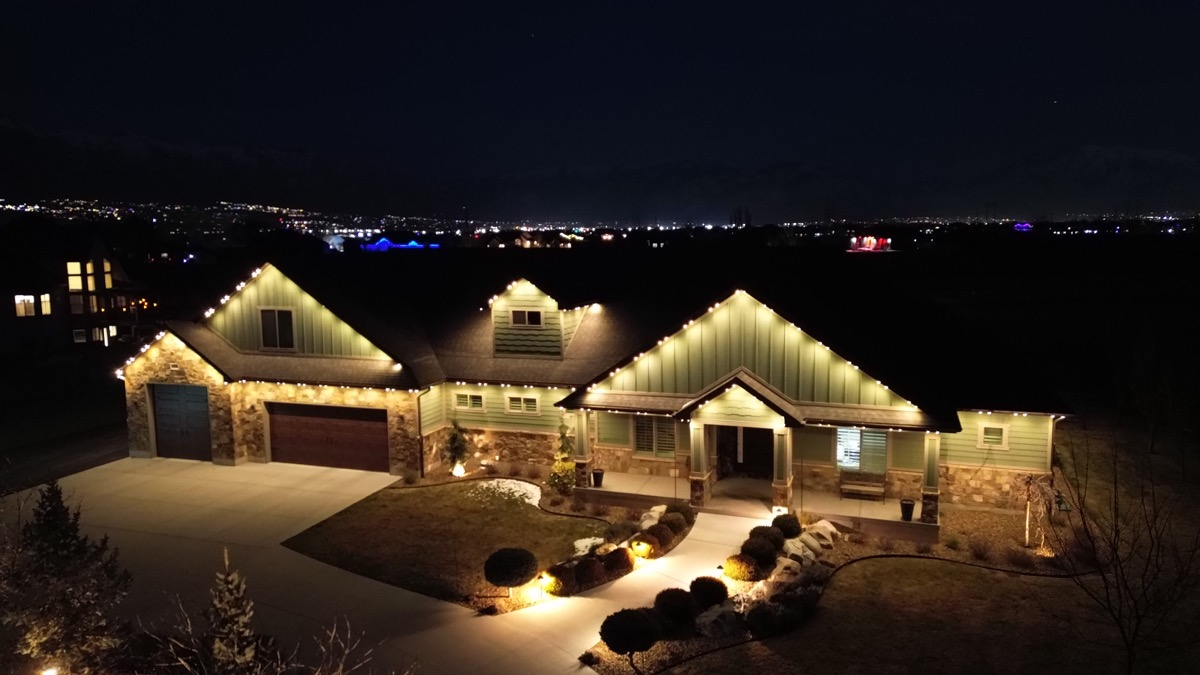
Permanent lighting gives you a finished look every single night. Soft warm white along the roofline makes a home look polished and intentional, the same way good landscaping or a clean driveway does. On Utah stone and stucco, which pick up warm light beautifully, the effect is especially noticeable.
We've installed on homes in Daybreak, SunCrest, Holladay, and across the Herriman developments, and the most common feedback we get isn't about holidays at all. It's "I didn't realize how much better the house would look on a regular Tuesday night."
Buyers notice it too. Realtors in the Salt Lake market are starting to list permanent lighting as a feature. In neighborhoods where homes share similar floor plans, that lit roofline is one of the easiest ways to stand out.
Wondering what it would cost for your home? Get an instant estimate using our satellite tool. No visit required.
Get Your Free QuoteYear-Round Use Changes the Whole Equation
Seasonal lights do one thing. Holiday colors in December. That's it.
A permanent RGBW system does whatever you want, whenever you want. Here's what a typical year looks like for our SLC customers:
- Winter evenings: Warm white accent lighting through the dark months. The sun sets before 5:30 from November through February, and a lit roofline makes a real difference pulling into the driveway.
- Valentine's Day: Red or pink. Takes about three seconds in the app.
- Fourth of July and Pioneer Day: Red, white, and blue. Utah is one of the few states with two major July holidays, so the lights get double duty.
- Halloween: Orange and purple. The houses that go all out on Halloween in neighborhoods like South Jordan and Riverton are often running permanent systems.
- Holidays: Classic warm white, multicolor, animated chase patterns. One tap.
- Game days: Red for the Utes. Blue for BYU. This one gets surprisingly competitive on some streets.
When you're using the system 200+ nights a year instead of 40, the cost-per-use drops to almost nothing. Seasonal lights can't touch that math.
Maintenance and Weather Performance
Utah is tough on anything that lives outside. Summer UV along the benches is intense. Winter brings freeze-thaw cycles that crack cheap plastic. November ice makes gutters and fascia slippery. And the inversions trap moisture that accelerates corrosion on exposed wiring.
Seasonal lights weren't built for any of that. They were built to survive six weeks in moderate conditions. In the Salt Lake climate, many strands don't even make it through one full season without issues.
Permanent systems are engineered for year-round outdoor exposure. TruLight SLC's LEDs are housed in weather-rated aluminum track, mounted under the eave line where they're protected from direct sun and most precipitation. The 48V architecture means less heat buildup in the wiring, which extends component life. And with 100,000+ hour rated lifespan, you're looking at decades of use at normal nightly run times.
Maintenance on a permanent system is basically zero. No bulbs to replace, no clips to re-attach, no wiring to patch. If something ever does need attention, the lifetime transferable warranty covers it.
The "Tacky" Question
Some people worry that permanent lights will look like Christmas year-round. It's a fair concern, and the answer comes down to design and quality.
Cheap permanent systems with visible tracks and oversized bulbs can look like leftover holiday lights. That's real. But a well-designed system with a low-profile track that's color-matched to your fascia is nearly invisible during the day. You don't see lights. You don't see hardware. You just see your house.
At night, the difference between warm white roofline lighting and holiday lights is obvious. One looks like architectural accent lighting. The other looks like decorations. When we install on stone facades in places like Draper or the Cottonwood Heights benches, daytime visitors genuinely don't notice the system is there until we point it out.
That invisible integration is the whole point. If you can see the track from the street during the day, it wasn't installed right.
Frequently Asked Questions
Can I still hang traditional holiday decorations with permanent lights?
Absolutely. Permanent roofline lighting handles your roofline and eaves. Wreaths, garland, yard decorations, and window lights are all separate. Many of our customers keep some of their favorite traditional pieces and just skip the roofline strands entirely.
Do permanent lights use more electricity than seasonal lights?
Less, actually. A permanent LED system running 4 to 6 hours per night costs about $4 to $5 per month on Rocky Mountain Power's current rates. Seasonal incandescent strands running the same schedule for six weeks typically cost more than an entire year of permanent LED use.
What happens if I sell my home?
The system stays with the house, and TruLight SLC's lifetime warranty transfers to the new owner at no cost. It becomes a built-in selling feature rather than something you have to remove or negotiate.
How long does installation take?
Most single-family homes along the Wasatch Front are completed in one day. Larger homes or complex rooflines with many peaks and dormers may take a day and a half. The system is functional the same day it's installed.
Related Articles
We've had this conversation with hundreds of homeowners across the Salt Lake Valley, and the ones who switch almost always say the same thing: they wish they'd done it sooner. If you want to see what a permanent system would look like on your home, we'll come out and give you a quote. No commitment, no pitch. Just the honest numbers and a look at what's possible.